
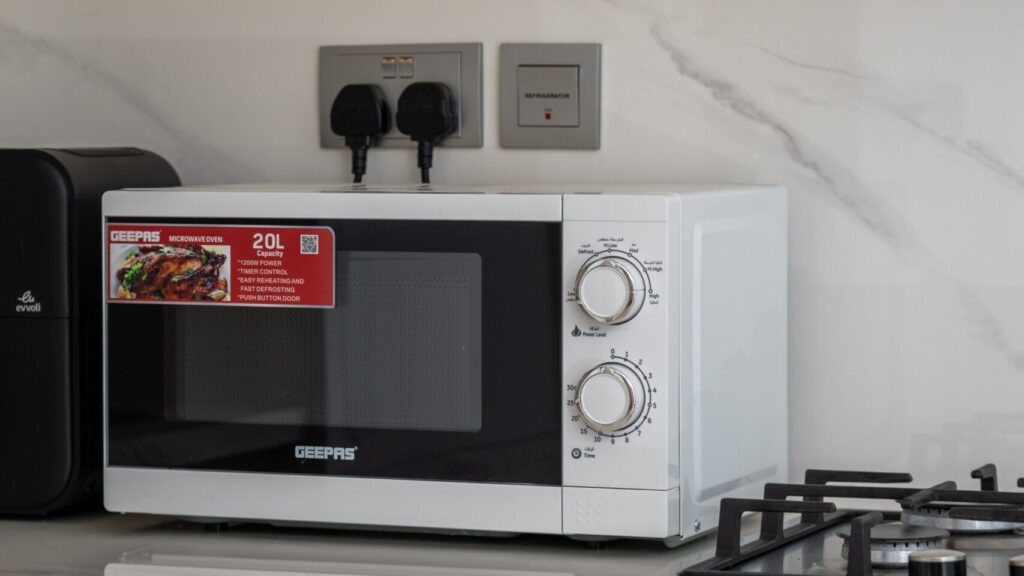
Microwave Not Heating? Common Causes & Fixes
Your microwave not heating is one of the most frustrating appliance failures. The light comes on, the turntable spins, the timer counts down — but your food comes out cold. Before you assume it’s time for a new microwave, know this: many no-heat problems come down to a handful of common causes, and a few of them have simple fixes.
In this guide, our appliance repair technicians in Frederick, MD explain why a microwave stops heating, the safe checks you can do yourself, and when to call a professional. One important warning first: microwaves contain a high-voltage capacitor that can hold a dangerous charge even when unplugged — so some of these repairs should never be DIY.
Quick Checks Before Anything Else
Start with the easy stuff. A surprising number of “broken” microwaves just need one of these fixes:
- Power supply: Make sure the microwave is plugged in firmly, the outlet works (test it with another device), and the breaker hasn’t tripped.
- Door fully closed: Open and close the door firmly. A door that isn’t latching won’t let the microwave heat.
- Child lock / demo mode: Many models have a child lock or showroom demo mode that disables heating. Check your manual for how to turn it off.
- Power level setting: Make sure the power level isn’t set to 0 or a defrost-only setting.
- Timer vs. cook time: Some microwaves have a separate kitchen timer that counts down without running the magnetron. Make sure you actually started a cooking cycle.
If none of these solve it, the problem is internal. Here’s what we find most often on service calls.
How to Confirm It’s Really Not Heating
Before assuming a part has failed, confirm the microwave truly isn’t heating — weak heating and no heating point to different problems. Try the water test: place a microwave-safe mug holding one cup of water inside and run the microwave on high for two minutes. The water should come out hot (be careful — it can be very hot). If it is lukewarm or cold while the microwave otherwise runs normally, you have confirmed a no-heat fault in the high-voltage system rather than a settings issue. If the water gets warm but not properly hot, the magnetron may be weakening — another good reason to have a technician take a look before it fails completely.
1. Door Latch and Interlock Switches
Your microwave has three or four door interlock switches — a safety system that cuts power to the magnetron if the door isn’t properly closed. If one switch fails or the latch hooks are worn, the microwave may run its fan and turntable but never send power to the heating components.
Signs of interlock trouble:
- The microwave runs but doesn’t heat.
- It only works if you push or hold the door.
- You don’t hear the usual “clicks” when closing the door.
- Visible damage or looseness in the door latch hooks.
The fix: Inspect the latch hooks for cracks and clean any food debris around the door frame. If a switch has failed, it needs replacement — this involves removing the cabinet near high-voltage components, so it’s a job for a trained technician, not a DIY project.
2. Failed Magnetron
The magnetron is the heart of your microwave — the component that actually generates the microwaves that heat your food. It’s also the most common internal part to fail. Magnetrons typically last around 2,000 hours of cooking (roughly 8–10 years of normal home use), and when they die, they usually die suddenly.
Signs of a dead magnetron:
- The microwave runs normally — light, fan, turntable all work — but produces zero heat.
- Sometimes accompanied by a louder-than-usual humming or buzzing.
- No burning smell and no visible damage; it just quietly stops heating one day.
The fix: Magnetron replacement. The part itself is moderately priced, and on many models a technician can swap it in a single visit. Because it sits in the high-voltage circuit, this is strictly professional territory. If your microwave is over 10 years old, though, compare the repair cost against a new unit — your technician can give you an honest recommendation.
3. High-Voltage Diode or Capacitor Failure
The high-voltage diode and capacitor work with the magnetron, doubling and storing the voltage it needs to operate. When the diode burns out or the capacitor fails, the magnetron can’t fire — and you get a microwave that runs but doesn’t heat.
Signs of diode/capacitor trouble:
- A loud buzzing or humming noise during operation.
- A burning or electrical smell.
- The microwave runs but food stays cold.
The fix: A technician can test the diode and capacitor with a multimeter and replace whichever has failed. These are inexpensive parts, but the repair involves the high-voltage circuit — and the capacitor can hold a charge even with the microwave unplugged. Never attempt this repair yourself.
4. Blown Internal Fuse or Tripped Breaker
Microwaves contain a ceramic fuse that protects the circuitry from power surges. After a storm-related surge or power flicker — not uncommon here in Frederick County — that fuse can blow. Depending on which fuse goes, the microwave may be completely dead or may power on without heating.
Signs of a blown fuse:
- The microwave is completely unresponsive (display dark, no light).
- Or: the display works but nothing heats and the unit shuts off unexpectedly.
- The problem started right after a power outage or storm.
The fix: Check your home’s breaker panel first. If the breaker is fine, the internal fuse needs replacement. Here’s the catch: a blown fuse is often a symptom of another problem (like a failing door switch or shorted component), so a technician should find out why it blew rather than just swapping it.
5. Faulty Control Board
If the door switches, magnetron, diode, capacitor, and fuses all check out, the main control board may be at fault. The board sends power to the magnetron and regulates cooking — when its relays or circuits fail, the microwave can run without ever engaging the heating components.
Signs of control board trouble:
- Erratic behavior: buttons that don’t respond, random shutting off, or the display freezing.
- The microwave runs but never heats, with all other components testing fine.
The fix: Control board replacement requires exact part matching and careful rewiring — a professional diagnosis first, since boards aren’t cheap and you don’t want to replace one unnecessarily.
Repair or Replace? How to Decide
Not every microwave that stops heating is worth fixing. Here’s how our technicians help Frederick homeowners decide:
- Countertop microwaves under 7 years old: Usually worth repairing — a magnetron or diode replacement costs far less than a quality new unit.
- Countertop microwaves over 10 years old: Basic new models are inexpensive, so replacement often makes more sense unless it’s a high-end unit.
- Over-the-range and built-in microwaves: Almost always worth repairing. Replacing them means paying for the unit plus installation, which can easily run several hundred dollars.
When in doubt, get a diagnosis. A good technician will tell you straight whether the repair is worth it — we’d rather earn your trust than sell you a repair you don’t need.
When to Call a Professional
Unlike a clogged dishwasher filter or a loose dryer hose, microwave repairs carry a real safety risk. Call a professional microwave repair technician in Frederick, MD when:
- The microwave runs but doesn’t heat and you’ve ruled out the quick checks above.
- You hear loud buzzing, smell burning, or see sparking or arcing — unplug the unit immediately and keep it unplugged.
- Your microwave is an over-the-range or built-in model (removal and reinstallation alone are tricky).
- The unit is still under manufacturer warranty (DIY attempts can void it).
Our technicians repair all major microwave brands, most in a single visit. Every repair is backed by our 2-year parts & labor warranty, and first-time customers get $25 off their first repair.
Frequently Asked Questions
Why is my microwave running but not heating?
The most common causes are a failed magnetron, a burned-out high-voltage diode, or faulty door interlock switches. The microwave’s fan, light, and turntable run on a separate circuit from the heating components, which is why everything looks normal while your food stays cold. A technician can pinpoint the failed part with a multimeter in minutes.
Is it worth repairing a microwave that doesn’t heat?
Often, yes — especially for over-the-range and built-in models, where replacement plus installation is expensive. For basic countertop models over 10 years old, replacement may be the smarter buy. A professional diagnosis (with an upfront quote) makes the decision easy.
Can a microwave suddenly stop heating?
Yes — this is actually the most common pattern. Magnetrons and diodes typically fail all at once rather than fading gradually. If your microwave heated fine yesterday and doesn’t today, with no other symptoms, a failed magnetron or diode is the likely culprit.
How long should a microwave last?
The average microwave lasts 9–10 years with normal home use. Heavy daily use shortens that, while light use can stretch it longer. If yours is approaching that age and needs a major repair, it’s worth weighing the fix against replacement.
Get Your Microwave Heating Again
A microwave that won’t heat doesn’t have to mean a microwave-shaped hole in your kitchen routine — or your wallet. Whether it’s a worn door switch, a failed magnetron, or something simpler, the technicians at Appliance Repair Frederick will diagnose it accurately and fix it right, backed by our 2-year parts & labor warranty.
Call (409) 269-5538 today, or book your repair online in under a minute. First-time customers get $25 off!